
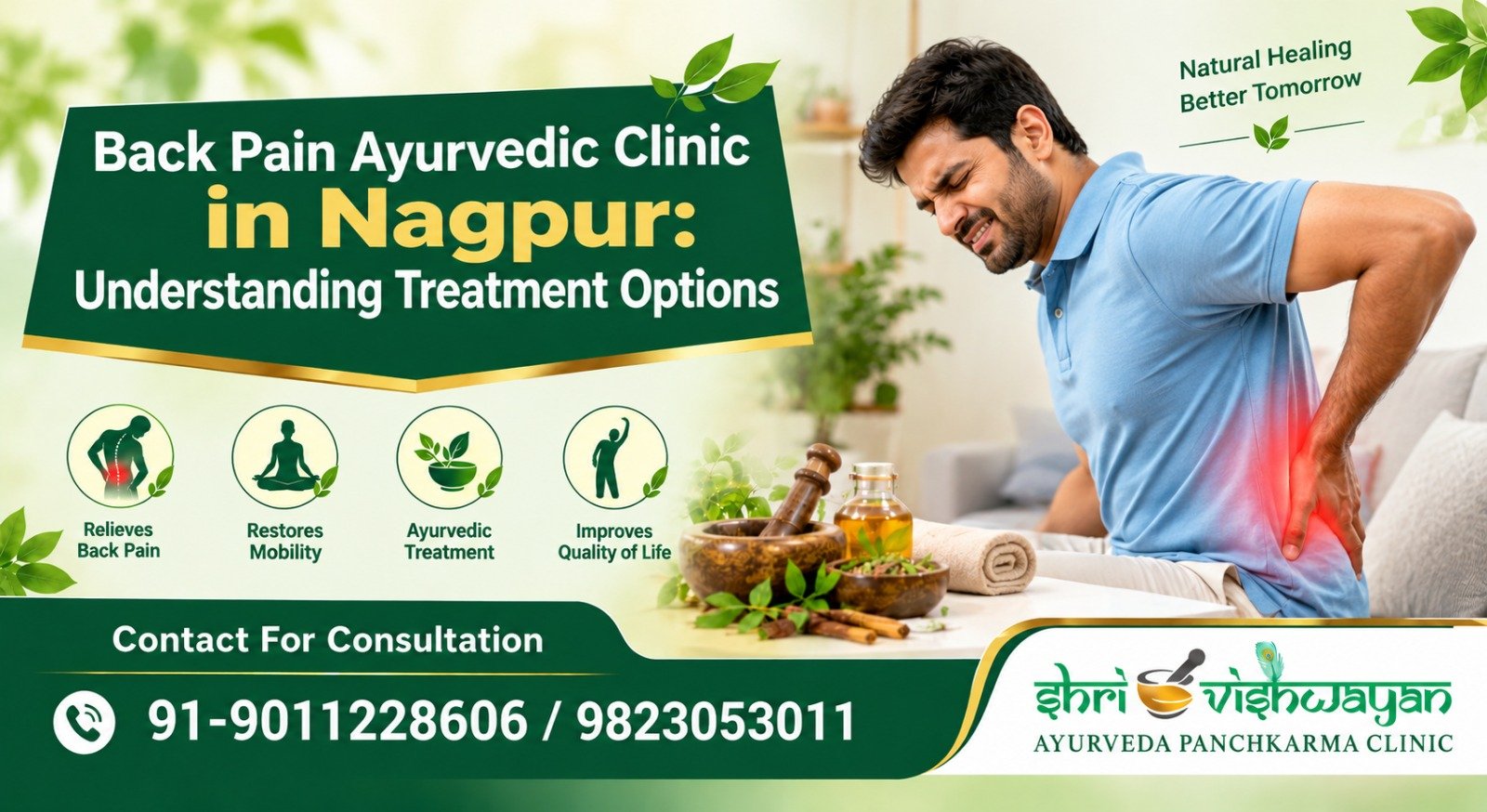
If you wake up every morning with a stiff back, or if sitting through a workday has started to feel like a punishment, you are not alone. In a city like Nagpur, where long commutes, desk jobs and heavy daily routines are common, back pain has quietly become one of the most frequent health complaints. Many people live with it for months, pop a painkiller when it gets bad, and hope it goes away.
Sometimes it does. Often it comes back. That is the point where people start looking for a different approach, and a back pain Ayurvedic clinic in Nagpur is usually one of the first places they turn to.
Why back pain happens in the first place
Before talking about treatment, it helps to understand the cause. Back pain rarely appears out of nowhere. The usual suspects are poor sitting posture, long hours on a laptop, lifting heavy things the wrong way, lack of exercise, weight gain, and stress. For some people it is linked to a slipped disc, spondylosis, or nerve compression.
Ayurveda looks at it a little differently. It connects most back and joint problems to an imbalance of Vata dosha, the energy associated with movement, dryness and nerves. When Vata goes out of balance, the body can feel stiff, dry and achy, and pain tends to get worse with cold weather, long sitting or irregular routines. This is why an Ayurvedic doctor will ask about your sleep, digestion and daily habits, not just the spot where it hurts.
What an Ayurvedic consultation looks like
Your first visit is usually more of a conversation than a quick prescription. The doctor will check your pulse, look at your posture, ask about your diet and lifestyle, and want to know how long the pain has been there and what makes it better or worse. Based on this, a plan is made for you specifically. Two people with back pain may get completely different treatments, and that is normal in Ayurveda.
Common Ayurvedic treatment options
Panchakarma therapies. Panchakarma in Nagpur is among the most sought-after options for chronic back pain. It is a set of cleansing and balancing therapies meant to remove built-up toxins and calm the aggravated dosha. Not every patient needs the full programme. Your doctor may choose only the therapies that suit your condition.
Kati Basti. This is a favourite for lower back pain. A ring of dough is placed on the lower back and filled with warm medicated oil, which stays there for a set time. The warmth and oil help relax tight muscles and ease stiffness around the spine.
Abhyanga and Swedana. Abhyanga is a full-body or targeted massage with herbal oils, followed by Swedana, a gentle herbal steam. Together they improve circulation, loosen the muscles and leave the body feeling lighter.
Basti (medicated enema therapy). In Ayurveda, Basti is considered one of the most effective treatments for Vata-related disorders. It is often recommended for chronic pain, sciatica and conditions involving the spine.
Internal medicines. Herbal formulations, such as those made with ashwagandha, guggulu and shallaki, are often prescribed to support bones, joints and nerves. These should always be taken under a qualified doctor’s guidance, never copied from a friend or the internet.
What about sciatica?
If your pain shoots down from the lower back into the hip, thigh or leg, it could be sciatica. It can feel like burning, tingling or numbness, and it can make walking or sitting really uncomfortable. Sciatica treatment in Nagpur through Ayurveda usually combines therapies like Kati Basti and Basti with medicines and specific lifestyle changes. The aim is to reduce nerve irritation and strengthen the back so the problem does not return.
Diet and lifestyle matter more than you think
Ayurveda does not treat the back in isolation. Even the best therapy will give limited results if daily habits keep working against it. A few simple changes can help:
- Eat warm, freshly cooked meals and cut down on cold, stale or very dry foods.
- Stay hydrated and keep a regular sleep schedule.
- Get up and move every 45 to 60 minutes if you sit for work.
- Practise gentle yoga such as Bhujangasana and Marjariasana, only if your doctor approves.
- Avoid heavy lifting and sudden bending while you are in pain.
- Keep your back warm in winter and during air-conditioned hours.
How long does treatment take?
This depends on how long you have had the pain and how severe it is. Mild or recent back pain may respond in a couple of weeks, while chronic or disc-related problems usually need a longer course and patience. Ayurveda is not a magic button. It works gradually, and results are best when you follow the plan consistently.
When should you see a doctor?
Do not wait it out if your back pain comes with numbness in the legs, loss of bladder or bowel control, fever, unexplained weight loss, or pain after an injury. These need urgent medical attention. For ordinary, long-lasting pain, though, a proper consultation at a good back pain Ayurvedic clinic in Nagpur can give you a clear picture of your options.
Choosing the right clinic
Look for a qualified BAMS doctor, a clean and well-run clinic, and a team that explains the treatment honestly instead of promising overnight cures. Ask how many sessions you will need and what the plan costs before you begin. A good clinic will be happy to answer.
Final thoughts
Back pain treatment in Nagpur does not have to mean a lifetime of tablets or the fear of surgery. For many people, Ayurveda offers a gentler, root-focused route that combines therapies, medicines and healthier habits. If your back has been troubling you for a while, a consultation is a sensible first step. Your spine carries you through every day, so it deserves some proper care.